Spoiler alert
A new version of the Mummy has just been released in cinemas.
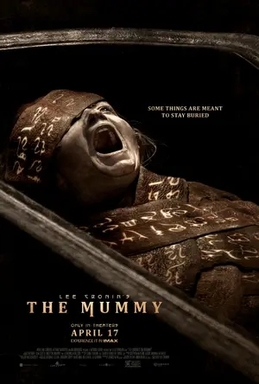
Written and directed by Lee Cronin, it offers a different take.
Katie, the daughter of an American family staying in Cairo, is kidnapped and turns up eight years later in a black basalt sarcophagus in the middle of a plane crash. She returns home to New Mexico in a catatonic state. And mayhem ensues.
Rather than a mummified Egyptian brought back to life, Cronin’s mummy is an ancient Egyptian demon that is intentionally trapped in a living victim and bound with special wrappings to contain its evil.
Cronin’s choice to side-step mummy tradition is notable.
Unlike the Vampire and Werewolf, which accumulated much additional background detail during the modern period from books, films, television and games, the mummy remains largely a cipher.
We are fast approaching the bicentenary of the mummy tale.
The first such novel, published in 1827, tells the tale of Cheops, who is reanimated in 2126 and experiences a future world, as imagined from the nineteenth century. Cheops is not a baddy.
Neither are the heroines of Théophile Gautier’s short story and later novel, in which the mummy is a love interest.
Over the nineteenth century, the mummy became increasingly an evil being, associated with other Halloween adjacent figures such as vampires and zombies. Like them, it was a living corpse. The embalming helped keep a semblance of life.
Short stories like Lost in a Pyramid by Louisa May Alcott, Lot No. 249 by Arthur Conan Doyle and the Jewel of the Seven Stars by Bram Stoker are just some of the short stories published at the height of mummymania.
Soon Hollywood was onto it with films starring Boris Karloff and later Christopher Lee.

Unlike other baddies, there is no silver bullet, no stake, no blow to the head. There is no sure way to kill a mummy.
But, there are certain tropes, some of which are problematic.
The presence of white experts or explorers, to explain or control the mummified remains, highlight the origins of the mummy tale within the context of colonialism.
In Lee Cronin’s film, a local white Egyptologist is asked to translate the text written on wrappings that fell off Katie’s leg.
‘That’s not hieroglyphics’, he replies, ‘that’s hieratic’. A steal-the-scene piece of scholarship, as ancient Egyptians would be more likely to use the cursive hieratic script on medium like papyrus or linen.
Within the context of the film, the dad is seeking advice in person, however, it’s notable he didn’t approach an Egyptian expert via the internet.
How in a franchise with so little consistent tradition, did Cronin hit upon one of the elements which needs to be left in the past?
In a period when fans are actively creating backstories for characters and exploring lore, while questioning tradition, it’s a shame that Cronin didn’t explore new ground in this area.
Cronin quotes earlier mummy films in key scenes, but really the film owes more to the Exorcist (and I’m meaning the schlocky later sequels here), than to traditional mummy tales.
It builds up slowly, with hints of domestic discord and a tacitly understood threat of sexual assault, slowly being overwhelmed, but never replaced, by occult horror.
The first half felt genuinely scary, but I don’t think it pays off in the end, as it culminates in body horror and jump scares.
Some of the scenes were so overblown they made me laugh: the mummified girl, breaking her way through the floor and climbing about on the ceiling, behind the backs of people at a funeral, was a particular highlight. The stuff of farce.
The film haunts you not with the horror, but with its inconsistencies of plot. To give one example: a mummy that could down one plane, seemed fine with international travel?
The actors are great, but ultimately the real star of the show are the crawl spaces between the walls in the family house in Albuquerque. I did not even know this was a thing.
It’s a fine film, but ultimately, what it really needed was the magic of Sir Brendan Fraser.

 Rhakotis