‘To quiver under the caress of Rodin’s fingers’
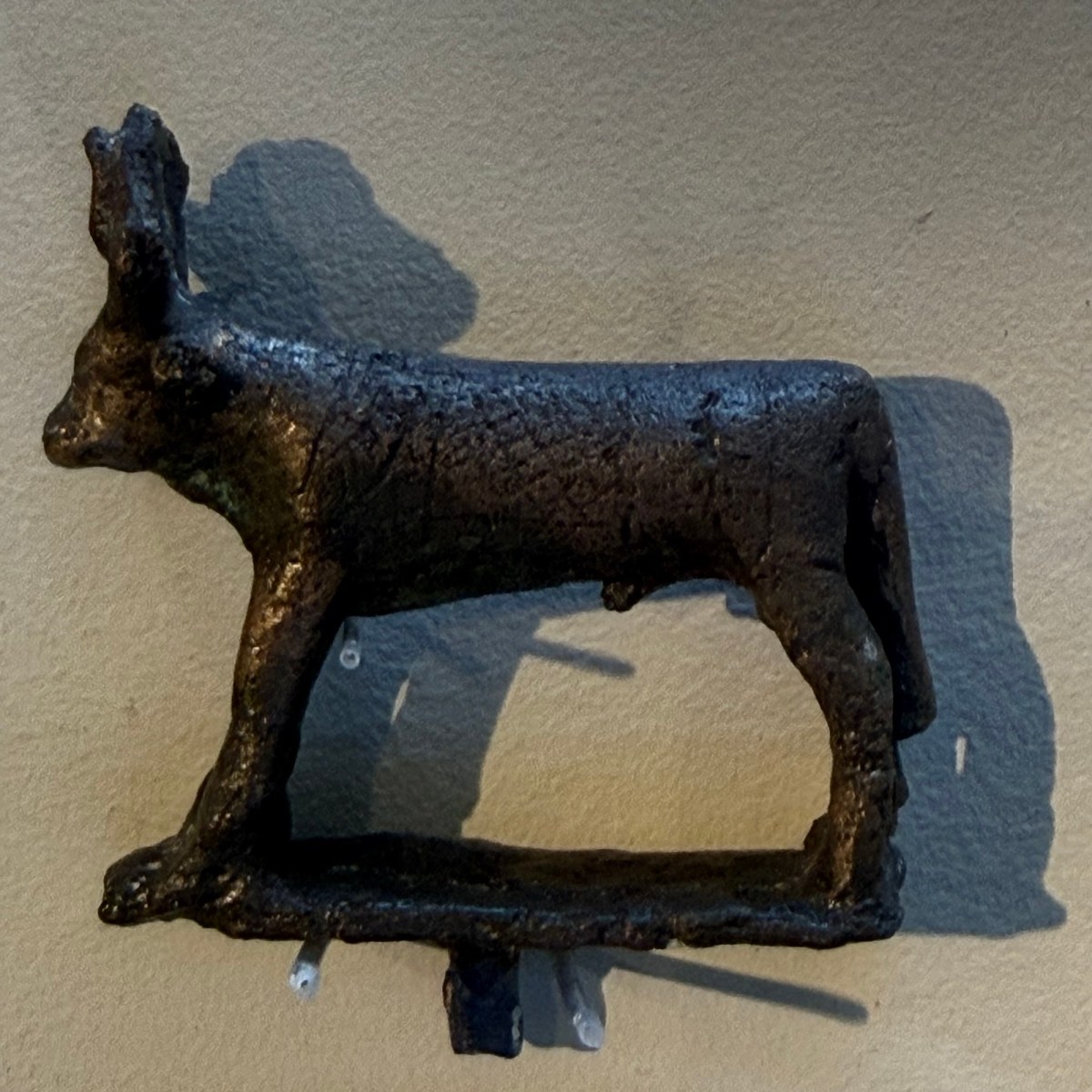
An exhibition at the Institute for the Study of the Ancient World in New York showcases 60 items from the Musée Rodin in Paris, including ancient Egyptian artworks collected by the French sculptor Auguste Rodin (1840-1917).
As a young man, Rodin was trained on classical models both at the Petite École and later copying works in the Louvre. He was inspired by Michelangelo. It was only from the 1880s, when he was 40, that he turned to Egyptian art.
Rodin’s emerging interest was contemporaneous with the 19th century French vogue for ancient Egyptian art, which emerged from European entanglements in Egypt, the decipherment of hieroglyphs and archaeology. In terms of politics, this culminated in the Anglo-Egyptian War of 1882 and in terms of art with the 1889 World Fair in Paris. It was within this complex context that Rodin began collecting Egyptian items.
Never a profound student of archaeology, Rodin had around five books on Egyptian art in his library. He also turned down a trip to the country. But he brought a deep understanding of artistic intent and craft.
Even while Egyptian art became fashionable, there remained a certain level of disdain in the academic art world, as some scholars compared Egyptian art to the Greek models.
But Rodin praised Egyptian art’s ‘grandiose simplicity incessantly expressive of life’.
Egyptian artists had different approaches to creating art and different aesthetic theories, which clearly inspired Rodin.
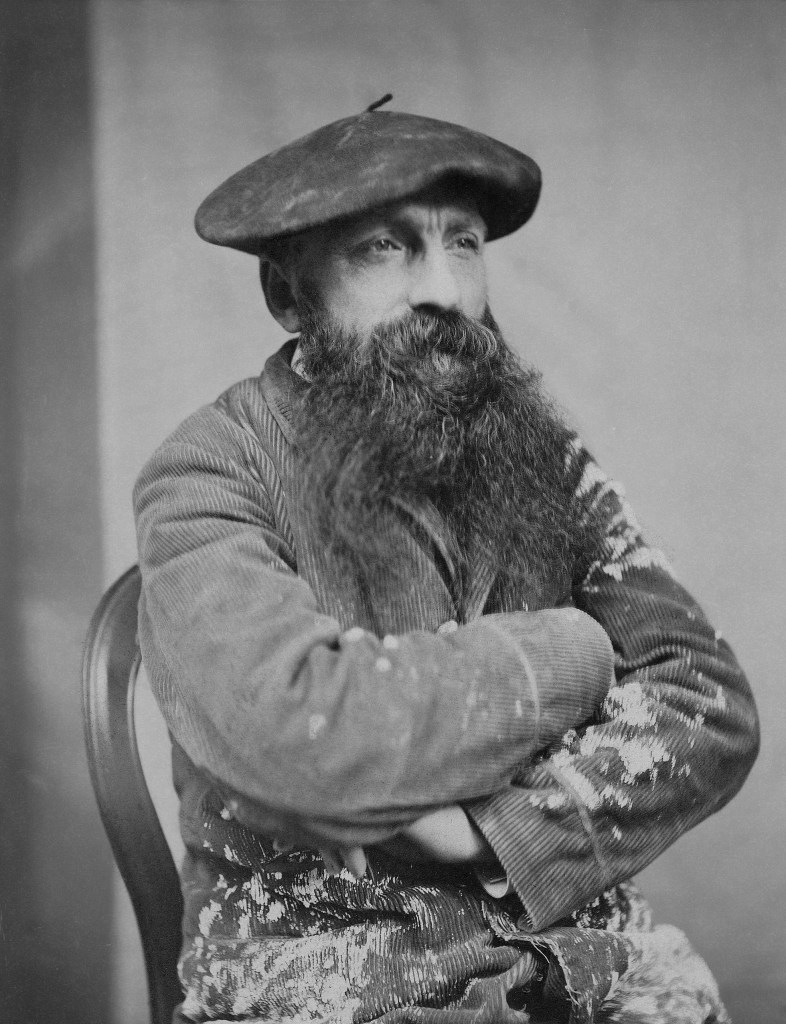
The curators argue that the objects in Rodin’s collection were removed from archaeological sites and sold without clear provenance. They were given meaning through the assemblage and creative work of Rodin. This may initially feel too strong, from a purely archaeological perspective, but it is a valid point.
He clearly felt strongly about his collection.
His friend, Elie Faure, described a sparrowhawk ‘quiver[ing] under the caress of Rodin’s fingers’. He thought Rodin gained strength and energy from touching the ancient works.
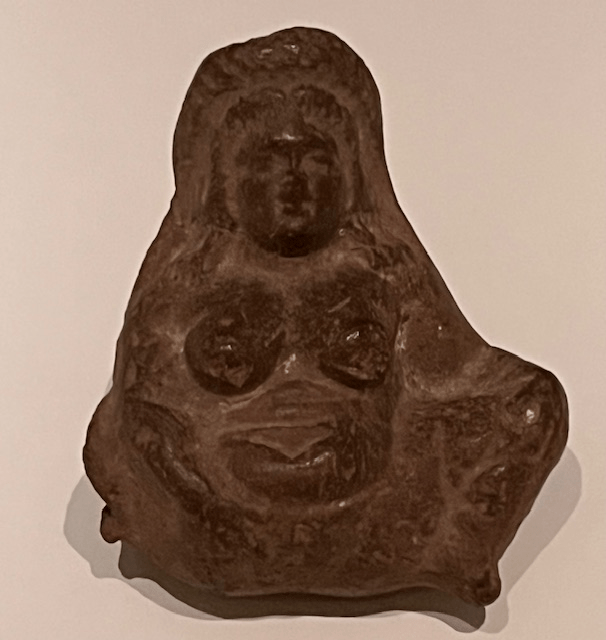
Rodin also directly drew on items in his collection. Etude pour Iris, torse is inspired by a Greco-Roman period terracotta figurine of Baubo.
He also made small sculptures of figures interacting with moulds of archaeological items. ‘Seemingly obsessed’, Benedicte Garnier calls Rodin’s experiments in this line.
There is something sensual about the soft, almost luminous curves of an Egyptian jar, juxtaposed with this rougher, more imperfect, but tactile human figurines.
While I have not been able to visit New York this year, as long planned, due to safety concerns for political reasons, the gorgeous exhibition booklet more than makes up for it, with high quality photos and academically accessible essays written by experts.
The placement of ancient items next to Rodin’s artworks, in the catalogue, clearly show the similarities, without reducing either partner to a subsidiary role.
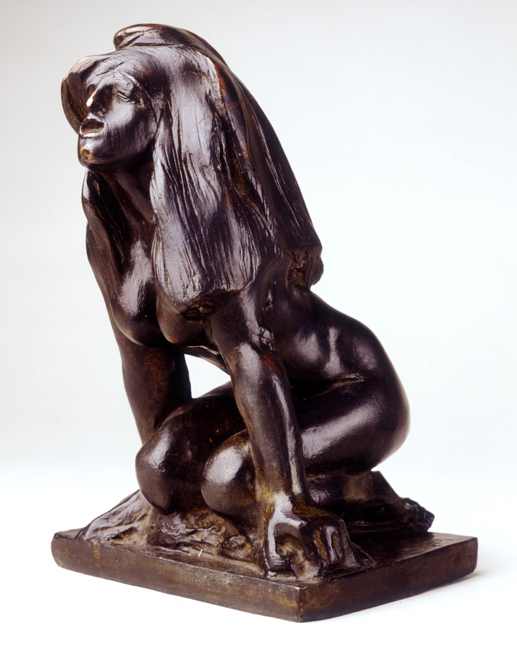
For example, Le Succube, Rodin’s haunting tortured bronze statue draws new insights by placement next to an elegant votive cat statuette and calm sandstone sphinx.
A major difference between the two systems of art – Western and Egyptian – is the value placed on an item and the understanding of what an object is within any given context.
As Dr Carl Walsh writes in his essay on ‘The Egyptian Body’, some religious objects could be imbued with agency through the Opening of the Mouth ceremony led by priests.
Such art works became not just items, but ‘beings’ which could interact with other beings (human and non-human).
This is a profoundly different way of seeing a world of objects, to the classic white cube gallery.
Yet I think Rodin implicitly understood something of this worldview.
This exhibition catalogue depicts artworks alive with agency, almost co-designing through the master’s fingers, new forms of art, of expression and of being.
For more information, please go to the Rodin’s Egypt website. The catalogue is available from Princeton University Press.


#/media/File:45_El_s%C3%BAcubo.jpg)