Mudlarking London’s lost treasure
They call the Northern section of the Thames foreshore by London Bridge, the ‘Roman Hole’. Time has worn away the riverbank revealing the soggy remains of the ancient town and port.
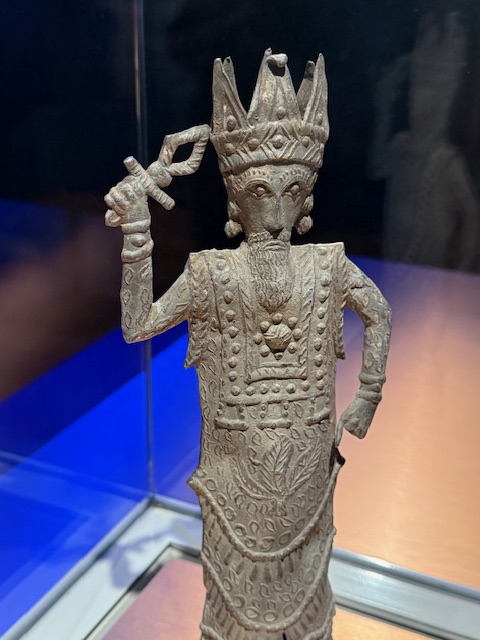
Objects dredged from this bit of the river include gems, pots and ancient gods.
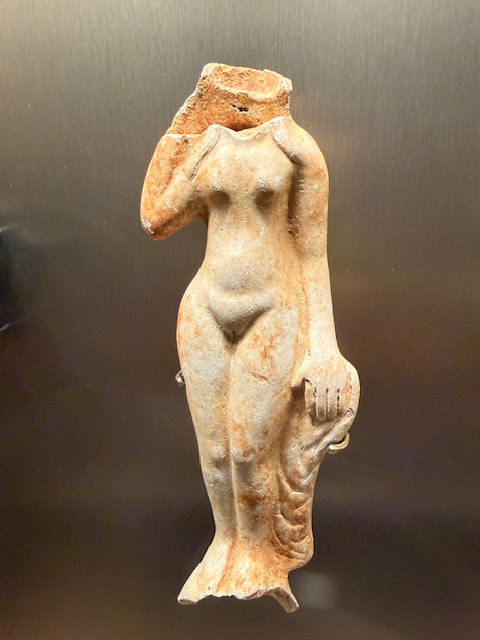
Venus, moulded in white ‘pipe clay’, an affordable piece of divinity, was clearly popular, or possibly not given the number of items found in the riparian sludge.
The Museum of the London Docklands current exhibition explores the stories of mudlarkers. It is a mixed exhibition covering the history of mudlarking itself, the archaeology of London through found objects and contemporary artistic responses.
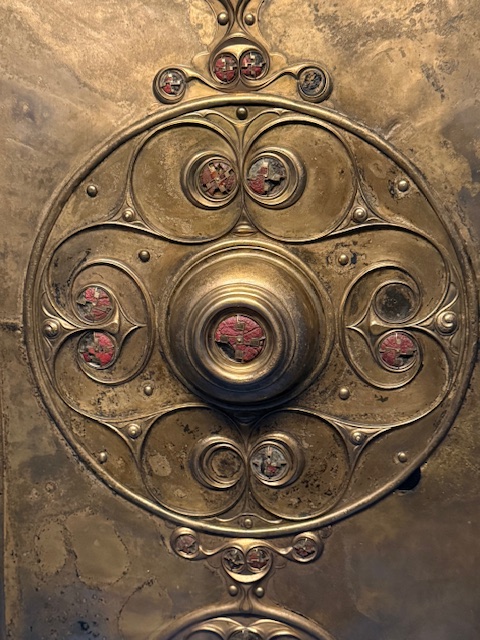
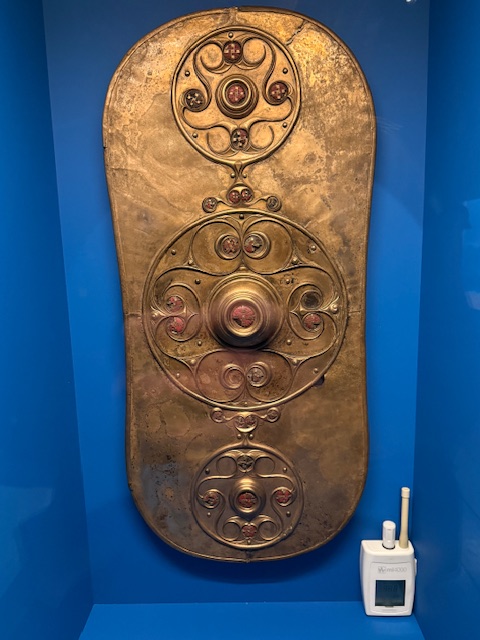
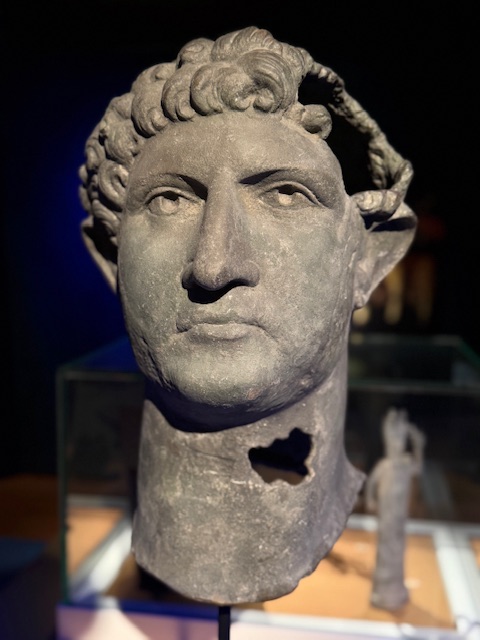
Some of the star mudlarking discoveries are notable by their absence. The silver Harpocrates statuette is still safely ensconced in the British Museum, who only reluctantly relinquish their hold on this precious item. The head of Hadrian is available only in replica. But the exhibition does hold the fabulous iron age Battersea Shield. An impressive object, it likely wasn’t used as a day-to-day object, and may have been given to the river as a special offering.
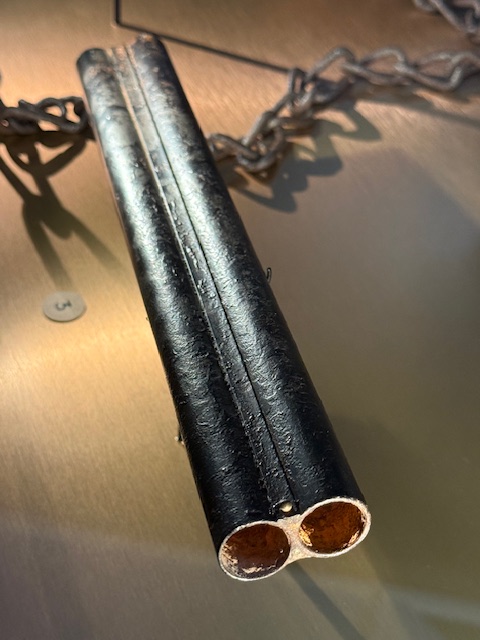
Many objects have been intentionally dropped in the river over the centuries. Sometimes for religious reasons, like the peacock statuette, believed to have been donated by Hindu worshippers in the modern period, and some for more nefarious reasons: like the sawn-off barrels from a shotgun almost definitely used for dodgy ends. But that’s London, for you.
Other objects include toys, spectacles, glass-eyes, false teeth, pots of unguents, fragments of delft-ware and many, many tobacco pipes. The curators have made a great selection to tell the city’s long and complex history of food, fun, crime, migration, trade and exploitation.
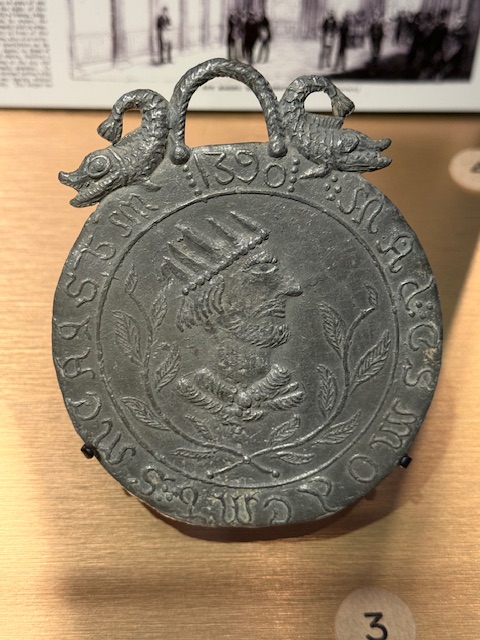
The stand out items – well part from the green stone carved penis with the head of a water buffalo – were the fakes made by Billy Smith and Charley Eaton. Finding it took too long to discover valuable historic objects, the pair created their own.
Known as the Shadwell Shams, the lead moulded pilgrim badges are skilfully wrought art objects, but they are not the best forgeries. One object has Arabic numerals in place of the Roman numerals used at the supposed time of creation, while another has a gibberish Latin inscription. The two men were illiterate.
They were regularly brought to court but never punished.
Towards the end of the exhibition, we are introduced to some of the modern mudlarkers via video. It is noticeable the class difference to the Victorians. Where the latter were forced by necessity to glean items like coal from the foreshore, sometimes reverting to theft to supplement their discoveries, the modern group practice it as a hobby or form of wellbeing.
They appear to be genuinely interested in the history of London, but there are certain limitations to this. One mudlark who researches the objects he finds and creates replicas of them, and is clearly an expert, explains how an object needs to talk to him before he collects it.
While another person discusses their unorthodox methods to preserve fragile archaeological items.
It would be unfair to criticise them too harshly given the objects would not have been found and recorded without their patient labour, but a heritage museum should really acknowledge the tension between professional and amateur archaeology.
But even with this important caveat, it remains an excellent show and well worth the trip on the DLR.

 Rhakotis