When I was very young, the toilets of our local church hall, cold, damp and a little spooky, had a wooden plaque hanging off an always empty toilet roll holder that said “If at first you don’t succeed, try, try and try again”. It had the image of a little spider at the side. The wording always confused me, why so many ‘tries’, but I recognised the story: a Scottish King, losing a battle, escaped to a cave where instead of commanding armies, he watched a small spider try to build a cobweb. The spider kept failing and kept trying again, until it finally succeeded. The king learnt his lesson and went on to win the battle.
Unplagued by the curse of constipation, I lost some of the subtle humor and assumed the plaque was left in the toilet to encourage people during a meditative moment. The message was clear: animals, even the most smallest and unpleasant, can teach us all great lessons.
At the heart of Julia Kindt’s new book The Trojan Horse and other stories: Ten ancient Creatures That Make Us Human lies the question of what makes us human. She writes “it is impossible to understand conceptions of the human animal without understanding conceptions of the non-human animal”.
Humans and animals have never been separate, although the relationships between different species varies at any time and hinges on complex factors. Kindt begins her book with Argos, Odysseus’ dog which he left on Ithaca at the start of his travels. 20 years later, old and unloved, Argos recognises his master and runs up to and dies in his arms. It is one of the most poignant homecoming scenes in literature (certainly in the Homeric epics, where Odysseus’ celebrates his return with a spree of ritualistic vengeance killing. Who is more human in this setting?)
Kindt’s book tackles over ten ‘stories’ about various animals in the ancient world. From Grunter the talking pig to the Trojan boar displayed on Trimalchio’s table. From the Sphinx beloved on Freud to Picasso’s troubling Minotaur. And explores what these tell us about how we as humans articulate and understand the world.
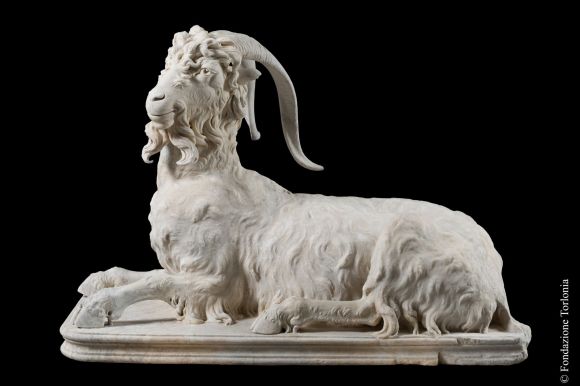
Greek heroes and monsters are the stuff of childhood and if they are enjoyed as adults, they are enjoyed apologetically. As lessons to learn or as rewritings.
For myself, the most fascinating element of Kindt’s book was her study of Lucius from the Golden Ass. Kindt foregrounds the fact that Lucius never loses his humanity. He can tell this by a few facts. His consciousness and his tastes remains resolutely rational:
Every evening after Thyasus had dined – and he always dined in grand style – my masters used to carry back the left-overs to our little room: one brought generous helpings of roast pork, chicken, fish and similar delicacies: the other brought bread, tarts, puff-pastry, twisted cheese-straws, marzipan lizards and many varieties of honey-cake.
But when they had locked the door and gone off to the baths to refresh themselves, I used to cram myself with the splendid food the gods had graciously put at my disposal, not being such a fool, such a complete ass, as to turn it down in favour of the coarse hay in my manger.
For a long time I was wonderfully successful in my pilfering: my technique was to take only a little from each of the many dishes on the table, knowing that my masters would never suspect an ass of playing such tricks on them. But gradually I grew overconfident and ate whatever I fancied: in fact, I picked out the best dishes and licked them clean.
We return here to the Structuralist concept of social relations. What makes the human human and the non-human animal, a non-human animal is the raw and the cooked, but one thinks also of (Adam) Smithian economics, rationality defined by measured self-interest.
This scene of organised gluttony happens towards the end of the Golden Ass, as Lucius’ ability to fulfill his human desires return, but not yet his prudence. As the novel closes, his sense of modesty returns, he flees from a situation of shameful desire, he has a vision of the goddess Isis, and is transformed back to a man and a convert to the Isis religion.
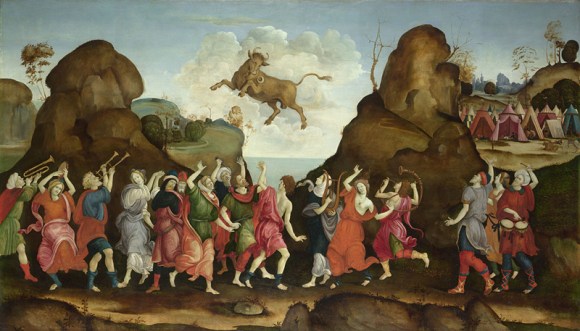
Oil and egg on wood, 78.1 x 137.2 cm (Bequeathed by Sir Henry Bernhard Samuelson, Bt, in memory of his father, 1937 NG4905)
What I liked about this book was that Kindt analyzed the stories, reviewing what other people said about them, but still left space for us to answer the question on what the stories are about.
I would have liked more on the nature of time and how this has impacted the human-animal relationship. Great social forces have impacted how we see ourselves and the world, most crucially ‘capitalism’ now impacts our relationship with the natural world, in sometimes positive ways, but also very negative ways such as climate change, and ecosystem and biodiversity loss. At the time I write, I am constantly reminded that microplastics have been found in animal and human bodies. The human is ceasing to become fully human, but is not becoming animal or divine, but something manmade and potentially toxic to itself.
At the same time, it is important to acknowledge that we in “the West”, understand pets and domestic animals in ways that other cultures would not.
I would also have liked more non-Greek animals. Creatures like the crocodile which were both feared and loved by Egyptians and non-Egyptians and became a de facto symbol of the Nile, offer ways to discuss imperialism, cosmopolitanism and consumption.
Nevertheless this is a fascinating book, provisioning important questions if not answers on what it means to be human.
It is in our struggles, that we strain, to retain the most human.
About the Rhakotis Prize
The Rhakotis Prize is unique in rewarding our panel more than the winners. The panelists enjoy a generous honorarium sponsored by generous business interests, with the decision made over a series of exquisite meals in some of the world’s finest restaurants.
The Rhakotis Award Laureates receive the glory and recognition of winning one of the most prestigious awards in the field of the classics beyond the classics.

 Rhakotis
One reply on “The Trojan Horse and Other Stories by Julia Kindt”
[…] The Trojan Horse and Other Stories by Julia Kindt The Winner of the Rhakotis Book Prize for 2024. […]
LikeLike