The Rhakotis Prize Committee are pleased to announce that Queens of a Fallen World by Kate Cooper has won the annual Rhakotis Prize. Cleopatra’s Daughter by Jane Draycott is runner up.
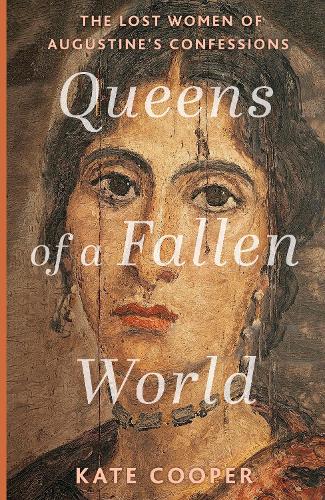
Queens of a Fallen World: The Lost Women of Augustine’s Confessions by Kate Cooper
Kate Cooper’s innovative group biography of the women around St Augustine offers new insight into an important turning point of history.
St Augustine is perhaps most famous (to non-theologians) for his prayer as a young man ‘“Lord, give me chastity and continence, but not yet!” Although not everyone wishes to be chaste, the mixed desires to stop an activity that gives pleasure but also pain, and yet to postpone complete abstinence, is very relatable. How many people will have given up smoking, chips, cream cakes or wine only a few days ago, after putting it off until the start of the new year (And good luck to them).
Cooper unpicks the playboy image of Augustine and introduces us to the women who impacted him, especially during the crucial years of 383-387 CE in Milan. It is a varied cast: the Empress Justina; his long term partner; the young child to whom Augustine was betrothed; and, most fearsome of all, his mother Monnica.
It is telling that we do not know the names of two of these key people or what happened to them when they left Augustine’s orbit.
Cooper presents the ancient world in all its essential ugliness. This was a world in which enslavement, violence and exploitation was the foundation of society. A world in which women could be used as collateral.
Cooper writes
In a world where brutality, bullying, and quid pro quo arrangements were the norm, the patronage, backing, and networks Augustine could secure for himself and his family could make a measurable difference to their prosperity.
Page 162
The ‘quid pro quo’ here was marriage to a young woman. We don’t know her name, Cooper calls her Tacita. At the point she is introduced to the story, Tacita was likely still a child. Wives married at a young age, often around 12. Augustine was betrothed to her, which suggests she was even younger than this. This was a ‘political’ union. Marriage, as Cooper argues, was a strategy to social progress.
Tacita was not marrying for love and may not have been looking forward to marriage. Cooper shows that domestic violence was acknowledged as part of marriage.
Augustine himself would have been aware of this from his own parent’s marriage and also from his mother:
Speaking as if she were joking but meaning it in earnest, she would blame their tongues, saying that the marriage agreement they had heard read out was in effect a sale making them the husband’s slave. In light of their status it made no sense to try to lord it over their masters.
Augustine’s Confessions 9.19, quoted on page 77
One gets the impression, from both Augustine, that Monnica was a strong character. She was ambitious for her son. Setting up the betrothal of her son.
In this complex world, Christianity was itself a form of power. Monnica may have become involved in the political conflict between Ambrose the well-connected bishop of Milan and Justina, the resident imperial power in the city. Augustine reports that she led the vigil outside one of the churches. Cooper speculates that Monnica’s interactions with Ambrose may have impacted the shape of her ambition for her son, away from political power to religious power.
It was in Milan that Augustine had his conversion experience to Christianity, inspired by the preaching of Ambrose, and his mother. During this period he did a lot of soul searching, ultimately deciding to become a celibate ascetic. This was not unique to Christianity, but Christianity had turned asceticism into an important social movement.
This for Cooper is the key moment. Why, she asks, did Augustine choose abstinence as an alternative to marriage with Tacita and not marriage to his son’s mother, with whom he was in a long relationship.
In the meantime, my sins were multiplying. The woman I had been sharing a bed with was torn from my side, and my heart, which clung to her, was cut and wounded and bleeding. And she went to Africa, vowing to You that she would never know another man.
Augustine, Confessions, 6.15.25, Quoted on page 177
These are powerful emotions and it is clear that it was not a casual relationship. This woman, whom Cooper calls Una, the One, may have been an enslaved person owned by Augustine or his mother. Cooper argues:
Of course, we have no way of knowing how Una felt about the liaison. We have no insight into how it started: whether he formally engaged a free concubine of simply made sexual use of a[n enslaved person]. We can only speculate as to whether they bantered and flirted when they first met or the tenor of their first encounter was openly coercive. We do know that Augustine came to depend on her and to love her. But, like most men who take up with women whose involvement is rooted in coercion or economic need, he almost certainly had no greater understanding of what his beloved thought about or felt for him.
Page 82
Cooper’s insight into the experience of women in terms of intersectionality is deep. Her work rests on rigorous scholarship, but does delve into speculation. This is always clearly signposted. Doing this offers new ways of reading the main source for these events, which is Augustine’s Confessions, his autobiography, a work of intense internal reflection. We do not have alternative accounts of what happened to compare with Augustine’s version, so I think it is valid to offer a grounded opinion about what the other people might have thought about events.
Cooper imagines an alternative ending with Augustine back in North Africa, having married Una, the happy father of surviving children and a local politician. It is charming, but one wonders how to reconcile the intense longing for transcendental meaning evident in the Confessions with the image of domestic bliss. Yet Queens of a Fallen World offers a powerful important reminder of the complexity that is at the heart of all individuals, and which drives history ever onwards.
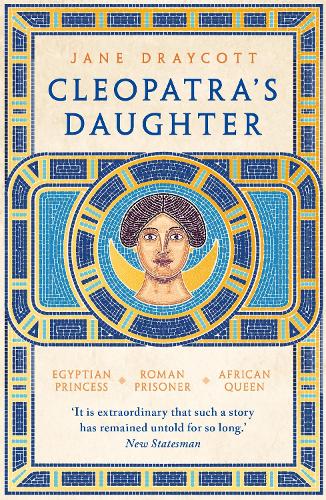
Cleopatra’s Daughter: Egyptian Princess, Roman Prisoner, African Queen by Jane Draycott
Jane Draycott’s biography on Cleopatra Selene II sheds new light on an important figure in the Augustan period.
Selene was the daughter of Cleopatra VII and Mark Antony. After their defeat and deaths, she was carried to Rome, aged 10, with her twin brother and paraded in one of the triumphs of Augustus. Following this humiliating introduction to the imperial capital, she was brought up by Octavia (her father’s former wife and Augustus’ sister) at the heart of Roman power.
Beyond these headlines, so much remains unknown about her early years, but they must have marked her in some way.
At 15, she was married to Juba II, also the son of a defeated enemy of Rome. The couple were trusted enough to be given power over Mauretania, a strategically vital region in North Africa. Selene was a key part of the government of this client kingdom.
Draycott is very good at unpicking Selene’s complex relationship to Rome. An image of the young girl walking to the library past a statue symbolizing her father’s defeat haunts the reader. Yet, she must have been an able politician both within Mauretania and also in her relations with Roman power.
Similarly Selene’s relationship to Egypt is knotty. As Draycott argues, although she would have remembered Egypt, she spent formative years of her life in Rome where she would have seen Egyptian items used to aggrandize Augustus, her father’s enemy and her patron. At the same time, Egypt was fashionable with different classes. For example, a hall in the Imperial palace in Rome was decorated with Egyptian art.
Draycott writes:
It must have been a strange experience for Cleopatra Selene to witness this dissonant mixture of revilement, appropriation, dissemination and celebration of her native Egyptian culture and its symbols. She may have been encouraged by her Roman family to set aside her Egyptian tendencies and proclivities in favour of Roman ones and behave in the manner of her half-sister. Alternatively, the fact that she was part Egyptian may have made her somewhat fashionable, an object of fascination to her peers. But it seems that she used her time in Rome wisely, learning exactly what aspects of Egypt and Egyptian culture the Romans found the most appealing, knowledge that she would use to her advantage during her reign as Queen of Mauretania.
Page 164
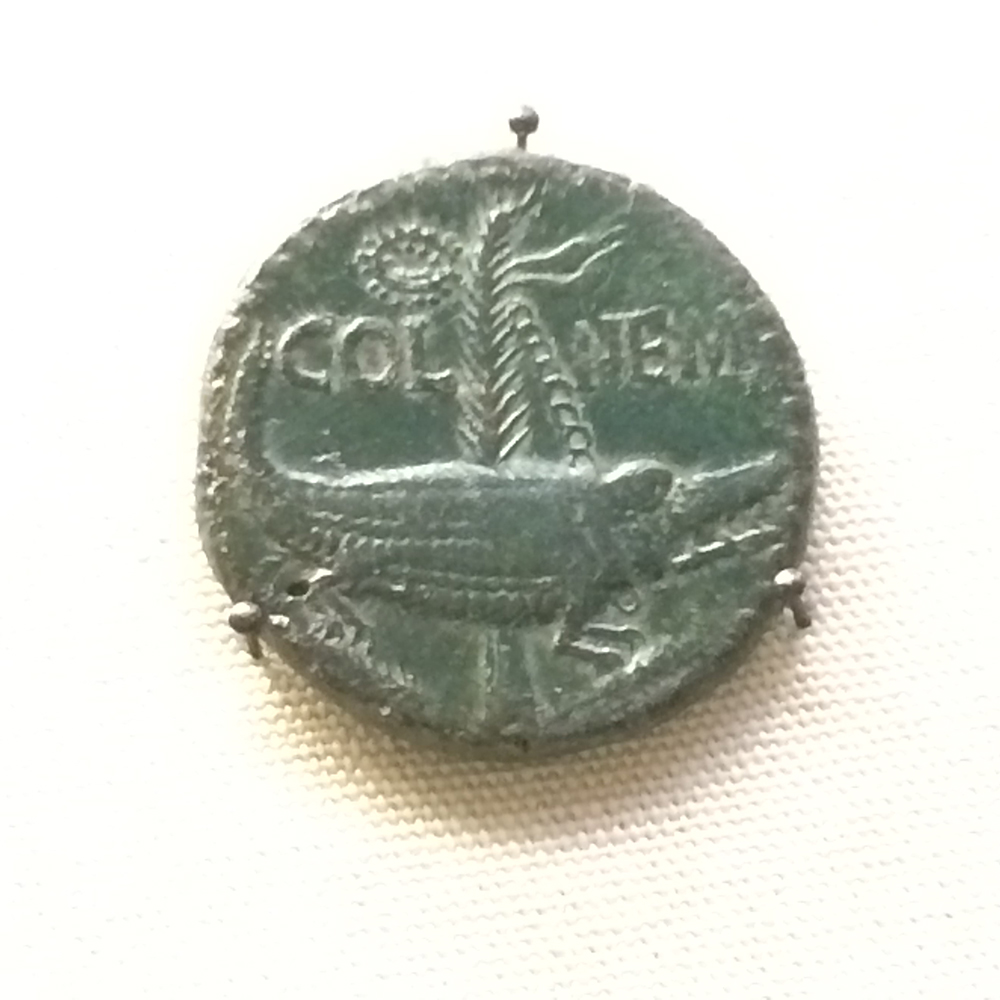
One intriguing detail is her love of crocodiles which Draycott argues became her ‘personal symbol’. She kept one, given to her by an expedition, (possibly) in the Temple of Isis. The crocodile was also used on Mauretanian coins.
Selene had two lasting impacts. First, she may have been the ancestor of important figures in the ancient world including Elgabalus and Zenobia. Second, as an African queen she offers an important counter argument to the often implicit racism at the heart of classical studies. Whether Selene was black or not, as Draycott argues, she was considered ‘mixed race’ in Antiquity (in the sense of being half Egyptian and half Greek).
As such, and given the complexities of her position, she offers a vital new way to read ancient history and consider its ongoing legacy.
Book covers used under Fair Use.

 Rhakotis